WhatsApp marketing for D2C brands: opt-in, templates and per-message pricing
WhatsApp is the most personal channel an Indian brand has, which is exactly why it is easy to misuse. Learn how opt-in, template categories and per-message pricing work before you blast a broadcast.
In this post 6 sections
For most Indian shoppers, WhatsApp is not "a marketing channel". It is where family, friends and work live. That is why messages from brands get read, and also why customers block brands quickly when they feel spammed. Done well, WhatsApp is one of the highest-return channels a D2C brand has. Done badly, it gets your number restricted.
This guide covers the WhatsApp Business Platform (the API, used through providers like Interakt, Wati, Gupshup, AiSensy or your Shopify app), not the free WhatsApp Business app on a phone.
Step one: real opt-in
Meta requires that customers opt in to receive messages from your business on WhatsApp, and that you make it clear what they are signing up for. In practice:
- Use a clear checkbox or button at checkout or sign-up: "Get order updates and offers on WhatsApp". Do not pre-tick it.
- Say what they will get (order updates? offers? both?) and roughly how often.
- Make it easy to stop: honour "STOP" replies and offer an opt-out button in marketing templates.
- Keep a record of when and where each person opted in.
India's Digital Personal Data Protection Act also expects clear, specific consent for using personal data, so a clean opt-in protects you on more than one front.
Template categories: marketing, utility, authentication
When a business starts a conversation (outside the customer's 24-hour window), it must use a pre-approved message template. Each template is classified into a category:
| Category | Use it for | Example |
|---|---|---|
| Marketing | Offers, launches, reminders to buy, re-engagement | "Your favourites are back in stock. 10% off till Sunday." |
| Utility | Updates about something the customer already did or asked for | Order confirmed, shipped, out for delivery, payment received |
| Authentication | One-time passwords | "Your login code is 482913" |
Meta reviews templates and can re-categorise them. A "shipping update" that also pushes a discount will usually be treated as marketing. Keep utility messages purely useful.
How pricing works now: per message
From 1 July 2025, Meta moved the WhatsApp Business Platform from conversation-based pricing to per-message pricing: you are charged when a template message is delivered, at a rate that depends on the template category and the recipient's country (Meta pricing docs). Key points:
- Marketing templates are the most expensive category.
- Utility templates sent within an open customer service window (24 hours after the customer messages you) are free.
- Normal free-form replies inside that 24-hour window are not charged.
- Utility and authentication messages get volume tiers: the rate drops as monthly volume grows.
- Your provider (BSP) usually adds its own fee on top of Meta's rate.
Rates change, sometimes quarterly, so always check Meta's current India rate card and your provider's price list rather than a number in a blog post (including this one).
Flows that work for D2C
- Order journey (utility): confirmation, shipped with tracking link, out for delivery. This cuts "where is my order?" calls and builds trust.
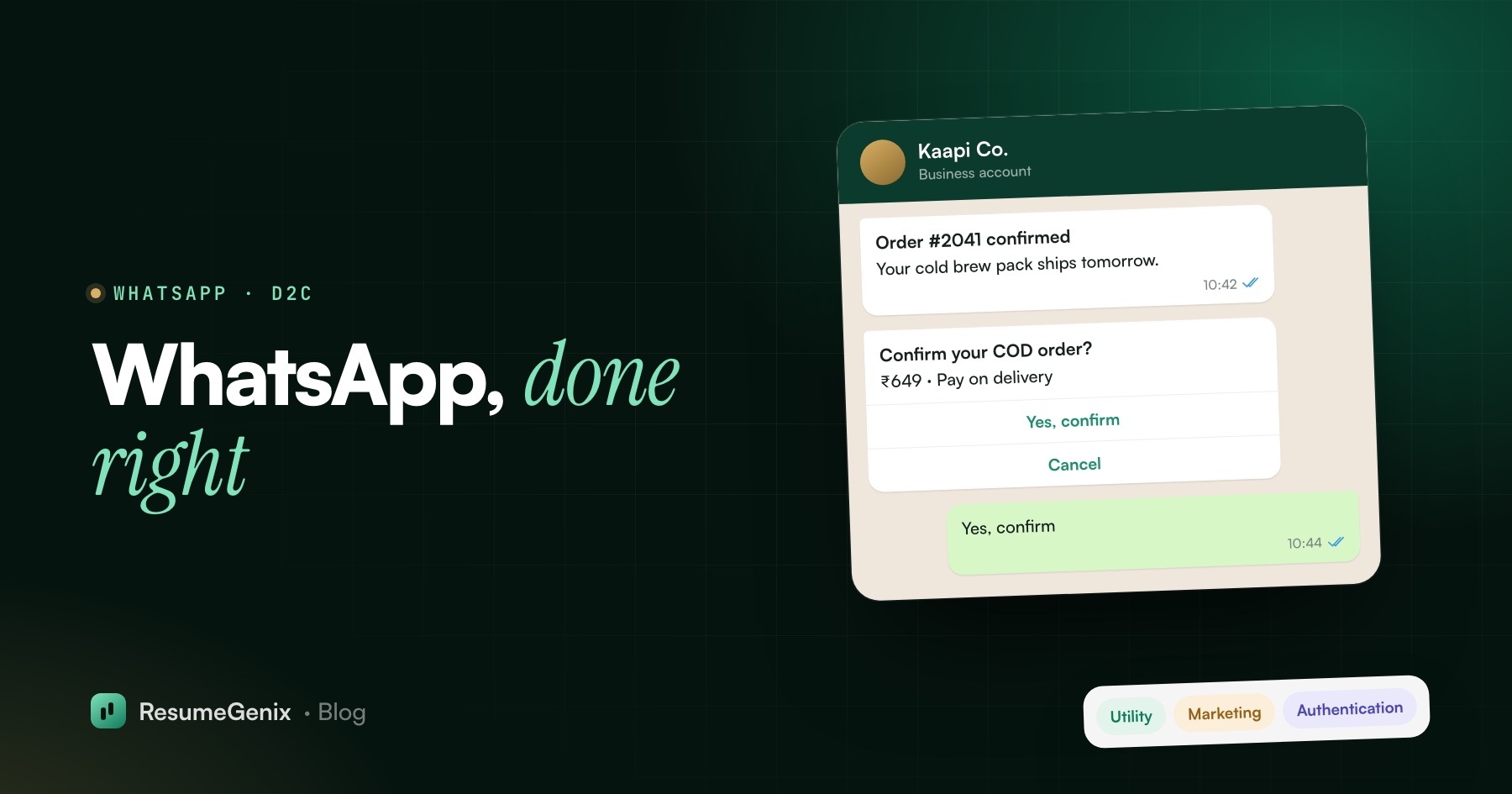
- COD confirmation (utility): a quick "Confirm your cash-on-delivery order" with yes/no buttons. Many Indian D2C brands use this to reduce RTO (return to origin) on COD orders.
- Abandoned cart (marketing): one reminder a few hours later, maybe a second the next day. Not five.
- Replenishment (marketing): for consumables like coffee, skincare or pet food, a reminder timed to when the pack usually runs out.
- Post-delivery check-in: ask how it went, link a short review form, and offer help. When the customer replies, you are inside the free service window.
Protect your quality rating
WhatsApp tracks how people react to your messages. If many users block or report you, your number's quality rating drops, and your messaging limits can be reduced. To stay healthy:
- Segment. Send the new-launch message to people who bought that category, not your whole list.
- Cap frequency. One or two marketing messages a week is plenty for most brands.
- Personalise properly: their name, their last product, their city. Not just "Dear Customer".
- Use buttons ("Shop now", "Not interested") so people have an easy alternative to blocking.
Measure the right numbers
Delivered and read rates look impressive on dashboards. What matters is:
- Revenue per 1,000 messages for each campaign (tag the links with UTMs so GA4 can attribute it).
- Cost per message including the provider fee, compared with your profit per order. Our D2C profit calculator helps you see what an order is really worth after shipping, returns and ads.
- Opt-out and block rate per campaign: the early warning sign.
Students: designing a full WhatsApp journey for a real or imagined D2C brand (opt-in screen, five templates by category, the expected cost per 1,000 messages) is a strong, practical portfolio project that few freshers have.
Free for digital marketing students: resume builder, portfolio, courses, certificates and a job tracker.
Keep reading
 ResumeGenix Weekly
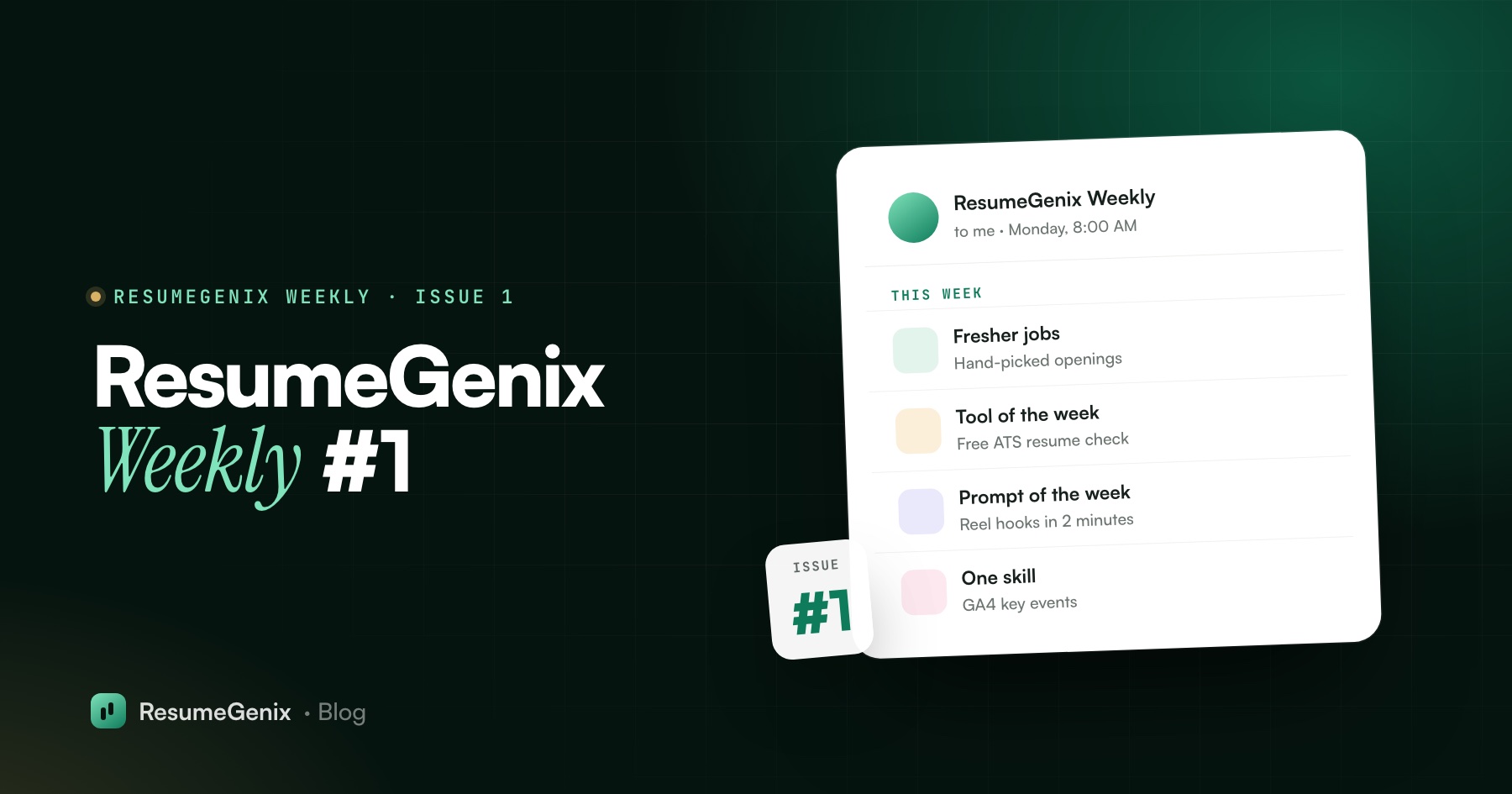
 #1: three AI guides, a free ATS check and your first prompt
Welcome to the first ResumeGenix Weekly. This week: where to find fresher openings, a free ATS check for your resume, a Reel hooks prompt you can use today, and GA4 key events in two minutes.
Read post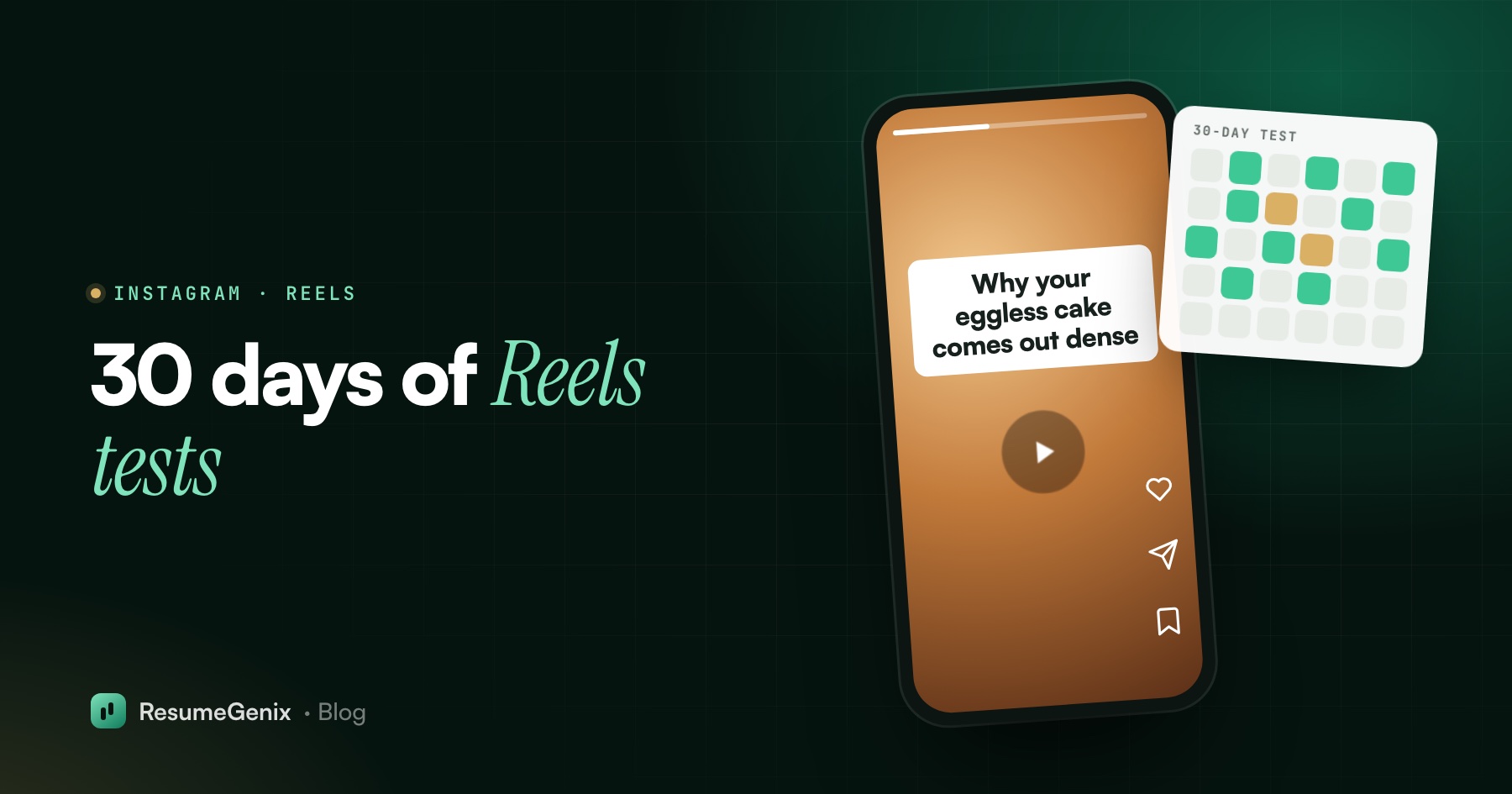 Instagram
A 30-day Instagram Reels test plan for small brands (no big budget needed)
Posting reels randomly and hoping one goes viral is not a strategy. Run a 30-day test instead: fixed formats, deliberate hooks and honest measurement. Here is the full plan.
Read post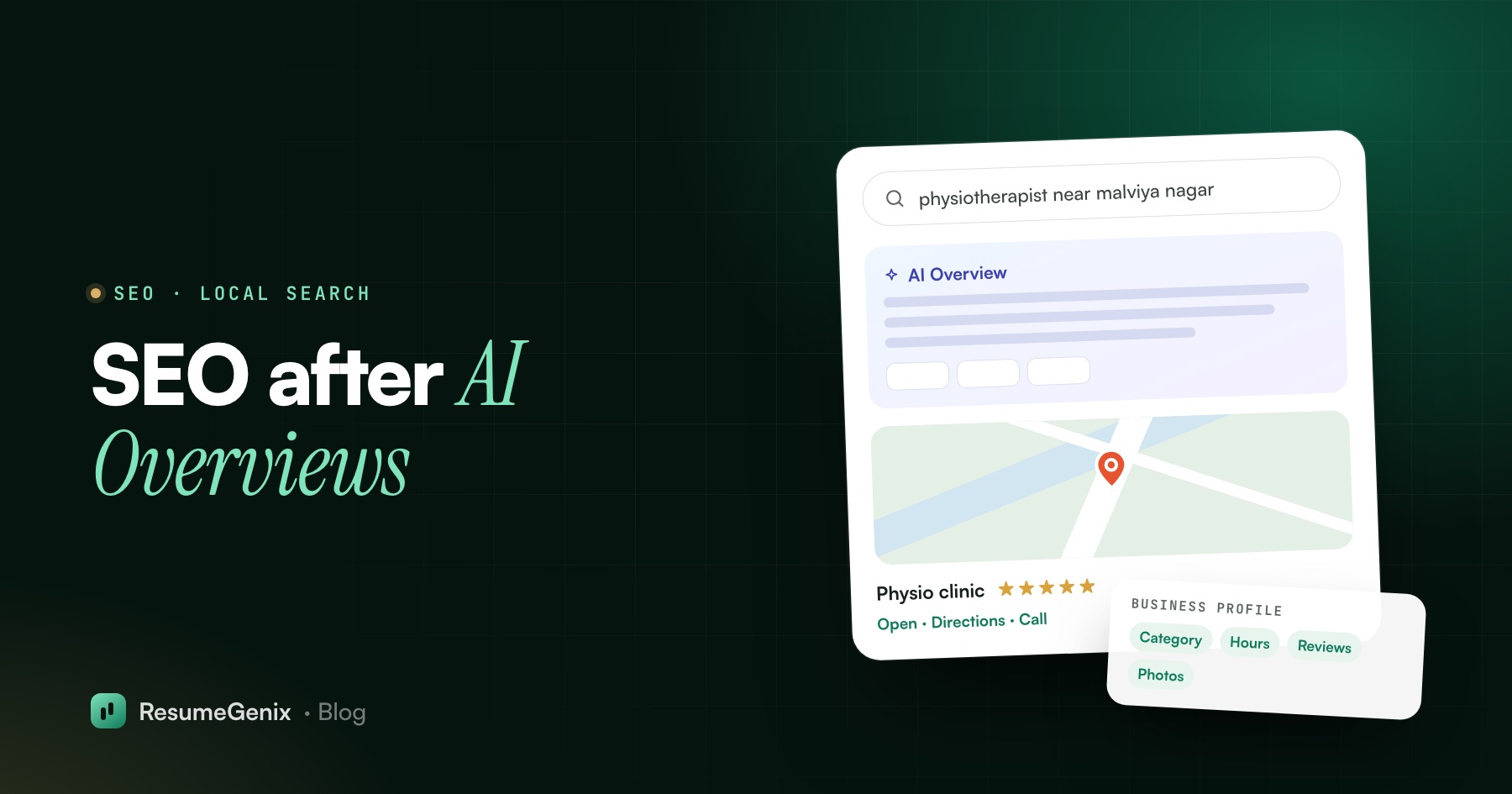 SEO
SEO after AI Overviews: what still works for small Indian businesses
'SEO is dead' gets said every year. What changed is which searches still send clicks. Here is what Google itself says about AI Overviews, and a practical plan for a clinic, shop or D2C brand.
Read post